

How to Sharpen and Maintain Tungsten Electrodes for Precision TIG Welding
Producing clean, precise TIG welds starts long before you strike an arc. One of the most critical — and often overlooked — steps is proper tungsten electrode maintenance and sharpening. When tungsten is clean and correctly shaped, you get a more stable arc, better heat control, reduced contamination, and noticeably improved weld quality.
Like any precision tool, tungsten electrodes wear over time. Knowing when and how to clean, sharpen, and store them is essential for consistent results in both production shops and one-off fabrication work.
Below, we break down best practices trusted by professional welders.
How to Clean a Tungsten Electrode

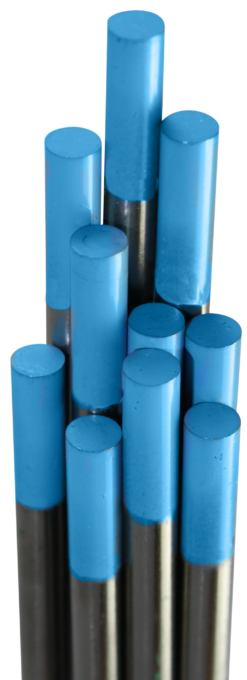
Cleaning tungsten should be part of your regular welding routine. Even minor contamination can disrupt arc stability and compromise weld integrity.
1. Inspect Before You Weld
Before cleaning, examine the electrode closely. Look for:
- Spatter buildup
- Oxidation or discoloration
- Rounded or damaged tips
Any of these can lead to arc wandering and poor puddle control.

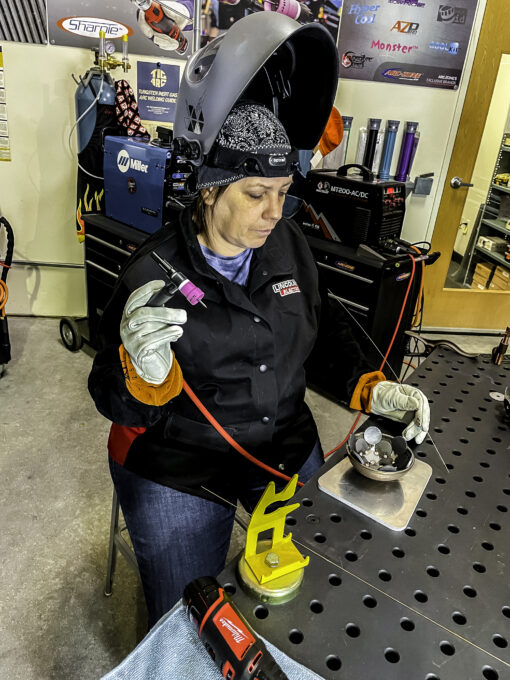
2. Mechanical Cleaning (Light Contamination)
For light contamination, use a dedicated tungsten grinder or diamond grinding wheel. Lightly grind the electrode until the contaminated area is removed and a clean surface is restored.
⚠️ Important: Never use a grinder that’s been used on steel, aluminum, or other metals — cross-contamination will undo your work.
3. Chemical Cleaning (Heavy Contamination)
For oil, grease, or stubborn residue, use a chemical cleaner specifically designed for tungsten electrodes. These cleaners remove contaminants without damaging the tungsten surface.
4. Polish the Electrode
After grinding or chemical cleaning, wipe the electrode with a clean, lint-free polishing cloth. This removes residual dust and helps ensure a smooth, consistent arc.
5. Handle With Care
Once cleaned, handle tungsten with clean gloves to prevent oils or dirt from transferring back onto the electrode.
✔️ Clean tungsten doesn’t just weld better — it lasts longer.
How Often Should You Sharpen Tungsten?
There’s no universal schedule, but these guidelines help maintain consistent weld quality:
• Before Each Welding Session
Inspect your tungsten before striking an arc. If the tip is rounded or contaminated, sharpen it. Even small imperfections affect arc stability.
• During Extended Welding
For long welding sessions, sharpening may be needed every few hours due to heat exposure and gradual wear.
• When Arc Stability Drops
If the arc starts to wander, flicker, or lose focus, stop and sharpen immediately.
• After Heavy Contamination
If the tungsten contacts molten metal or filler rod, clean and re-sharpen before continuing.
Experienced welders learn to recognize these signs quickly — and addressing them early saves time and material.
Tungsten Electrode Guidelines Every Welder Should Follow
Choose the Right Tungsten
Electrode selection directly impacts performance:
- Pure Tungsten (Green): Aluminum & magnesium (AC)
- Thoriated (Red): Stable DC arc for steel (use proper safety precautions when grinding)
- Ceriated (Grey): Excellent for low-amperage work
- Lanthanated (Gold): Strong DC performance on stainless
- Rare Earth (Blue): Versatile AC/DC with excellent arc stability
Select the Proper Diameter
Match tungsten size to amperage:
- Higher amperage → thicker electrodes
- Lower amperage → thinner electrodes
Proper Sharpening Techniques
Grind the Correct Shape
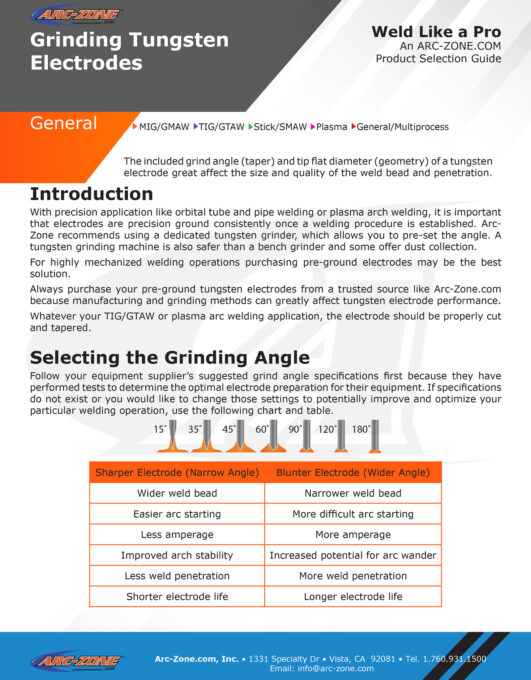
- DC Welding: Pointed tip (30–40° taper)
- AC Welding: Rounded/balled tip for aluminum
Grind in the Right Direction
Always grind lengthwise, not around the electrode. This promotes a focused arc and consistent electron flow.
Use a Dedicated Grinder
A purpose-built tungsten grinder helps:
- Prevent contamination
- Achieve repeatable angles
- Maintain consistent tip geometry
(Professional shops often rely on precision tungsten grinders for this reason.)
This image is part of our tungsten grinding guide; click it to access the full PDF with step-by-step instructions.

Preventing Tungsten Contamination
Tungsten contamination is one of the most common causes of poor weld quality. Common sources include:
- Contact with molten base metal or spatter
- Accidental contact with filler rods
- Oxidation from air exposure at high temperatures
- Contaminated shielding gas
- Dirty or shared grinder wheels
- Improper storage or handling
- Excessive heat from incorrect settings
- Cross-contamination between dissimilar metals
Good habits — clean grinding, proper storage, correct amperage, and controlled gas flow — go a long way in protecting your tungsten investment.
Final Thoughts
Maintaining and sharpening tungsten electrodes isn’t busy work — it’s a foundational skill for achieving cleaner welds, better arc control, and professional-grade results. With regular inspection, proper sharpening techniques, and contamination control, your tungsten electrodes will perform consistently and last longer.
At Arc-Zone, we support welders with the tools, knowledge, and precision equipment needed to weld with confidence — whether you’re running a production shop or dialing in a perfect TIG bead.
Precision Sharpening Made Easy with Sharpie™ Tungsten Grinders
Consistent tungsten geometry is critical for repeatable, high-quality TIG welds, and that’s where Sharpie™ Tungsten Grinders stand out. Designed specifically for tungsten electrodes, Sharpie grinders deliver precise, lengthwise grinds with adjustable angles for both AC and DC applications — helping welders achieve stable arcs and cleaner starts every time. Unlike shared bench grinders, Sharpie grinders reduce the risk of cross-contamination while saving time at the bench or on the jobsite. Whether you’re sharpening occasionally or maintaining tungsten throughout a full production shift, Sharpie™ grinders provide the control, consistency, and reliability professional welders demand.
Built for Precision. Trusted by the Pros.
Explore tungsten electrodes, sharpening tools, and shop-tested welding solutions at Arc-Zone.com — and follow us on Instagram and YouTube for real-world TIG tips from working professionals.

